
Sustainable balconies
City dwellers find ways of making their apartments and condos more sustainable with solar panels and small gardens

Balconies are big selling points for condos and apartments. When showing off a place to potential buyers or renters, the real estate agent or property manager will smile, slowly slide and open the glass door, and, while directing the clients onto the balcony, will then exclaim over the view afforded by the extension of the living space high above the urban landscape.
The potential buyers or renters’ jaws will drop as they imagine themselves, book in hand, stretched out on their deck chairs enjoying sunshine and cool breezes. Or they see themselves entertaining and impressing friends on their balconies.
For most folks, however, once they move in, the balcony is ignored, remaining bereft of any furniture or niceties. At best, the balcony serves as a storage unit for things, such as bicycles, that folks just don’t want to keep inside.
But as our world heats up, more and more folks want to do something for the environment. Even within their condos and apartments, people are realizing that balconies can help save the planet.
Solar-powered balconies
Germany has freed up some of its regulations on solar panels, enabling its residents to install small solar panels on their balconies. With an easily purchased adapter, these panels can be plugged into a wall socket, turning balconies into energy sources for the power grid.
The installation fee can amount to as little as $240, and the panels can generate wattage for less than half the cost of electricity from the grid. Even more expensive units pay for themselves within four to seven years; after that, the power generated by a balcony solar installation is free.
Lest you think that the power companies and the fossil fuel industry will put the kibosh on any efforts to do the same in the U.S., one of the reddest states in the Union, Idaho, has passed legislation similar to Germany’s to get balcony solar off the ground there.
Edible balconies
In the last year or so, the concept and practice of what is called edible balconies has picked up a little steam. I’ve run across the term a few times in some recent news articles and opinion pieces.
An edible balcony is simply growing food on the limited space a balcony provides. Balcony farmers probably don’t have the room to grow potatoes or corn, and they certainly don’t have the space for a large apple tree, but there are plenty of vegetable plants that are well suited to balcony farming. Everybody loves tomatoes, and their vines enable them to grow terrific produce in a very small space. Other fruits and vegetables include basil, lettuce, radishes, strawberries, and peppers.
From my experience gardening in a small backyard plot, greens such as Swiss chard can offer generous bounty in a limited space. And beets may be one of the best bets for small-scale gardening, as just about the entire plant, the greens and beet root, are edible. Additionally, beans that climb as vines will grow well on a balcony trellis.
The National Garden Bureau, a nonprofit that serves as the marketing department of the gardening industry, goes so far as to specify the varieties of tomatoes and other vegetables for a balcony garden. They even list smallish types of eggplants that are suitable for small gardens.

The Interior Design website The Grumpy Owl, has some balcony gardening pointers, including household composting as part of a home microfarming enterprise. There are even two women, María Paz Gardiazabal and Beatriz Irarrázabal, who have dedicated their efforts specifically to balcony gardening, with a full program of training and balcony garden design.
Where it all started
Folks have actually grown food on their balconies out of convenience or to satisfy their green thumbs for a long time, but the idea hadn’t been promoted or supported on a large scale until more recent times. The first person to advance the idea of growing food on one’s balcony as an environmental practice can be credited to Indira Naidoo, an Australian born journalist who may have coined the term when she came out with her first book, The Edible Balcony, in 2011.
In the book, Naidoo shares the steps she took to transform her small, 13th-floor balcony into a viable kitchen garden. The book chronicles a full year in which the author and human rights advocate produced fresh fruits and vegetables in her balcony’s limited space. She also shares recipes that she used to cook and prepare her balcony harvest for the table.
Recent research
Agronomists and urban sustainability advocates consider edible balconies a subset of what has been dubbed Zfarming, which is shorthand for zero acreage farming; i.e., growing food in areas that are not farms, such as urban settings, rooftops, and other small(ish) locations.
Researchers in Cyprus looked at papers published on the subject of edible balconies and summarized their findings in the journal Buildings in November. They noted that balconies that hang or extend out from buildings will enjoy the sunlight needed for balcony gardening, while recessed balconies can be too shaded for most produce plants to grow well. They also caution that winds can whip balconies on upper stories. They suggest using larger, heavier container pots that won’t topple in strong winds and securing strong screens or barriers to deflect winds.
The researchers found that space can be multiplied by using small hanging wall containers. These require less soil and dry out quicker than larger containers, so they need more frequent watering. These containers are quite small, 7 by 24 inches, But if you stack five of these on your balcony wall, you wind up with nearly six square feet of balcony garden area. More garden space can be created by growing vegetables in hanging baskets.
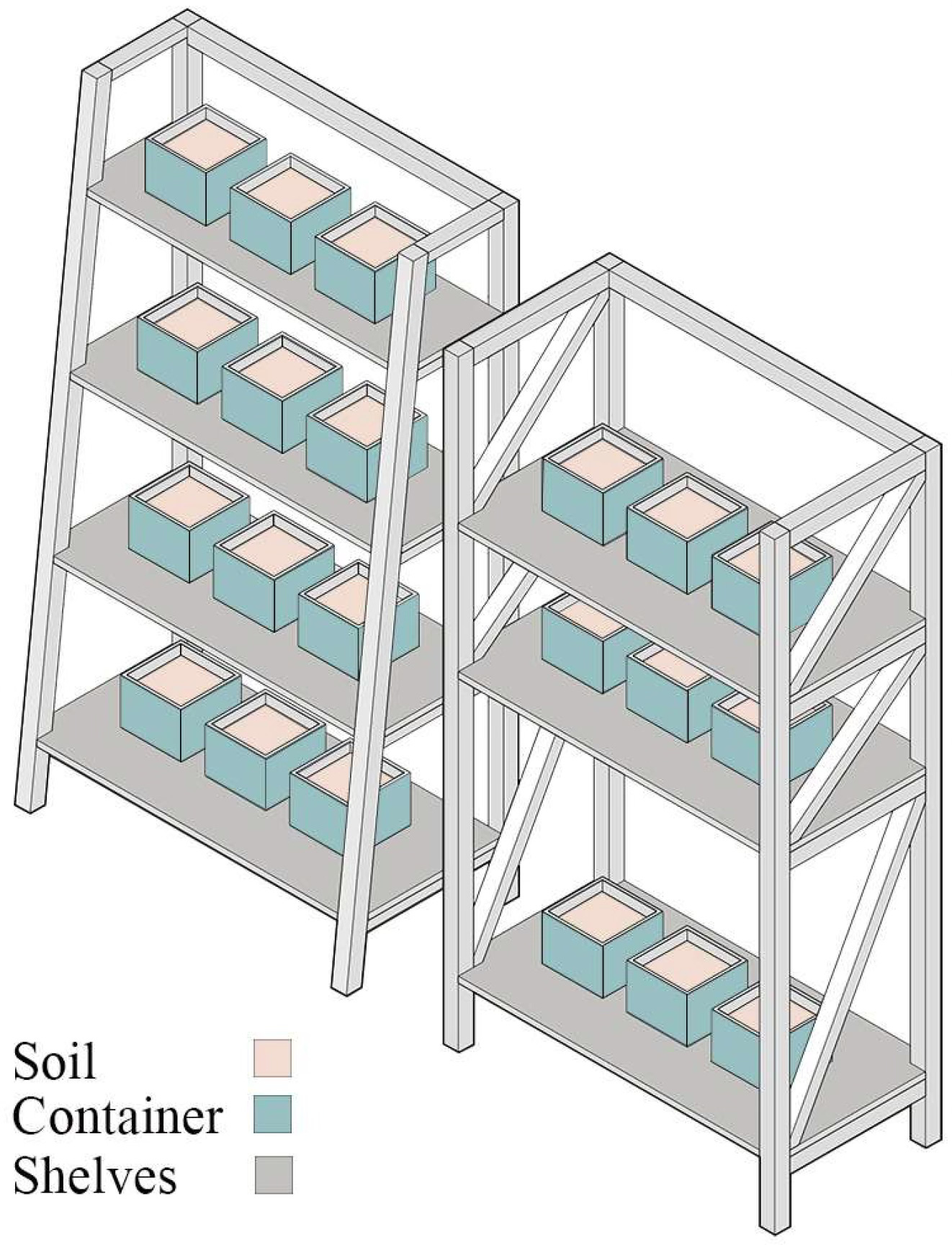
The authors also found urban gardeners had success with small greenhouses installed on their balconies. The greenhouses greatly extended the growing season and protected garden pants from bad weather and pests.
Do you garden in a limited space, such as a balcony? Would you like to and just need a little know-how? How about balcony solar? Would you try it? Share your experience or thoughts in a comment.
Previous Green Dispatches on the goodness of gardening:
One problem with most North American balconies is that they are like giant radiator fins, causing huge heat loss in winter and gain in summer. In Europe there are requirements for thermal breaks that separate the balcony from the structure, but it costs money that developers don’t want to spend. https://www.treehugger.com/gimme-thermal-break-its-schocking-these-are-not-required-all-buildings-4854918
The research on recessed vs hanging balconies is a detail most people miss when they start balcony gardening. I've seen folks get frustrated after a season because their recessed balcony just doesn't get enough light, and they end up blaming their technique rather than the architecture. The Cyprus study is interesting but what stood out to me was the small greenhouse suggestion for extending seasons. That feels like a game-changer for northern climates where the growing window is tight. Also, the connection to Z-farming as a broader urban food production movement adds context that most balcony gardening guides skip. It's not just about growing tomatoes, it'sabout rethinking how cities can produce food in spaces that were never designed for it.