
Municipalities embrace composting to fight climate change
And you can, too

As the federal government turns its back on the environment, it’s good to know that state and local municipalities are still able and willing to fight global warming. One tactic cities are using to reduce greenhouse gases is to encourage or require their residents to compost.
This might sound like a touchy-feelie approach to environmental stewardship, akin to cursory beach clean-ups, but diverting green waste into compost bins and away from city dumps and landfills can keep a lot of greenhouse gases from going into the atmosphere.
Before the 1970s, before the first Earth Day and greater environmental awareness, everybody tossed out their green waste—their grass clippings, apple cores, coffee grounds, etc.—with their other trash. Cities picked up the trash and tossed it in the dump or landfill. It was simple enough, but when food waste and green waste are dumped in a big pile, they rot anaerobically. Besides making that rotten garbage smell, anaerobic decomposition produces methane, a greenhouse gas that is about 28 to 36 times more powerful at warming the planet than carbon dioxide.
Landfills and dumps are one of the largest sources of human-related methane emissions, accounting for more than 14 percent of methane emissions in 2022. The greenhouse gas effects of these emissions are equivalent to the those produced by 24 million gasoline-powered cars in one year or more than 13 million homes’ energy use for one year. So reducing food waste and green waste in landfills is every bit as important as reducing the burning of fossil fuels. That’s why cities are encouraging or requiring their residents to compost.
Some cities, such as Pittsburgh, encourage residents to compost but don’t have official composting programs. Other cities make composting part of their public waste disposal services. Unsurprisingly, the city of Portland, Oregon, has a composting program. But Houston, in red, red Texas has one as well.
In November of last year, Cleveland, Ohio, began a composting program working in partnership with Rust Belt Riders, a locally owned commercial and residential composting business. The program, funded through a federal grant from the U.S. Agriculture Department, provides those enrolled in the program with access to community composting bins. The program is voluntary; residents can enroll for $12.00 a month. To help lower income families join in, Cleveland offers 250 free memberships for SNAP-eligible households.
In April, New York City started a mandatory composting program, requiring residents to separate their kitchen scraps and other green waste from the regular trash sent to landfills. Those who don’t separate their green waste from the rest of their trash can face fines.
San Diego, where I live, started a composting program about three years ago. It’s not mandatory, but there are encouraging signs that folks are taking part in it more and more. In 2022, the first year of operations, 90,400 tons of organic waste went to the compost program. In 2023, that number increased to 108,115 tons. And that number increased further, to 158,086 tons, in 2024.
Home composting
Even though my city has a composting program, I compost at home. I mostly do it out of habit, as I started composting before San Diego began its program. Besides saving the planet, homemade compost can give you excellent fertilizer for your garden.
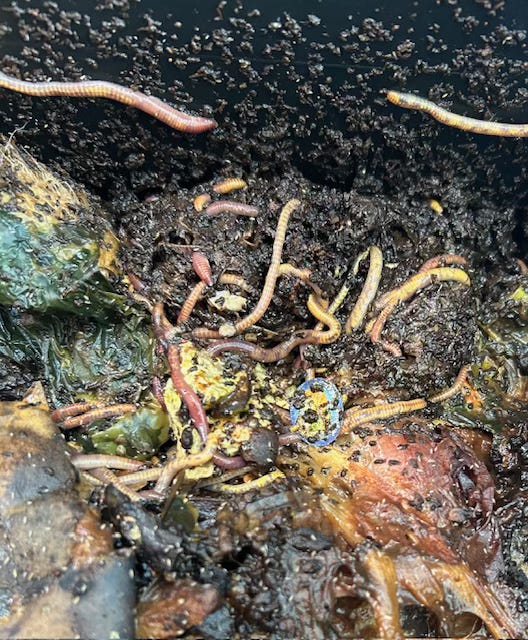
There are plenty of resources to help you start your home composting. Classes are available, often through colleges and universities as part of their extended studies programs. Taking one of these classes can make all the difference between your first batches of compost producing a rich, fertilizing humus or a big stinking pile of rot. If a class isn’t convenient, there are several online resources and books. And there are lots and lots of Youtube videos on the subject.

With so many good resources available, I will not offer a composting tutorial here, but I will suggest a couple things I’ve learned. A lot of folks keep a compost bucket by their kitchen sink to collect kitchen scraps before tossing them into the compost bin. If you tend to this bucket every day, this method should work well, but if you let it go for two or three days, the contents can get smelly and attract bugs. My wife and I have found it better to collect food scraps in a container in the refrigerator. I’ve kept peels and other food scraps in the refrigerator for a week before putting them in my bin to compost, and it works out fine.
The other thing I do, and I think I’m one of the few folks who do this, I compost old clothes. I don’t take my old clothes to secondhand shops, preferring to wear them until they are worn out. (I know I look like a bum half the time, but, well… OK, so I look like a bum.)
I’ve only composted cotton, as I have few wool clothes and have managed to keep those in wearable condition. When I compost an old shirt or pair of pants, I cut out all the heavy stitching that holds the different pieces of cloth together. These threads are sometimes made of plastic and won’t break down in a compost pile. Cotton breaks down more slowly than table scraps, so I wind up returning the cloth to the next pile when I harvest a batch of compost. I also compost old bed linens and cleaning towels that are past their prime.
Does your city have municipal composting? Do you compost at home? What has been your experience? Please share by clicking the “Leave a comment button below.
Well done. Great read and glad there is an effort to make this happen.
Years ago, we had an idea: Green bin garbage trucked to the dump and using methane and other gases, along with solar and wind to provide the energy to convert waste to BIOCHAR. The biochar would be trucked back to the city in empty garbage trucks........waste has value as the biochar would be sold to farmers, greenhouses and gardeners.