
In touch: wart-stemmed ceanothus
Rare and endangered, this beautiful shrub provides food for bees, butterflies, and other pollinators

We got some rain recently, but this morning, it’s a bright sunshiny day. Postcard blue skies framed Otay Mountain and the Peninsular Mountains to the east during my commute. And it’s already warm, in the seventies, once I get to work. Another special treat: thousands of bees greet me as they swarm around the blooms of two wart-stemmed ceanothus shrubs.
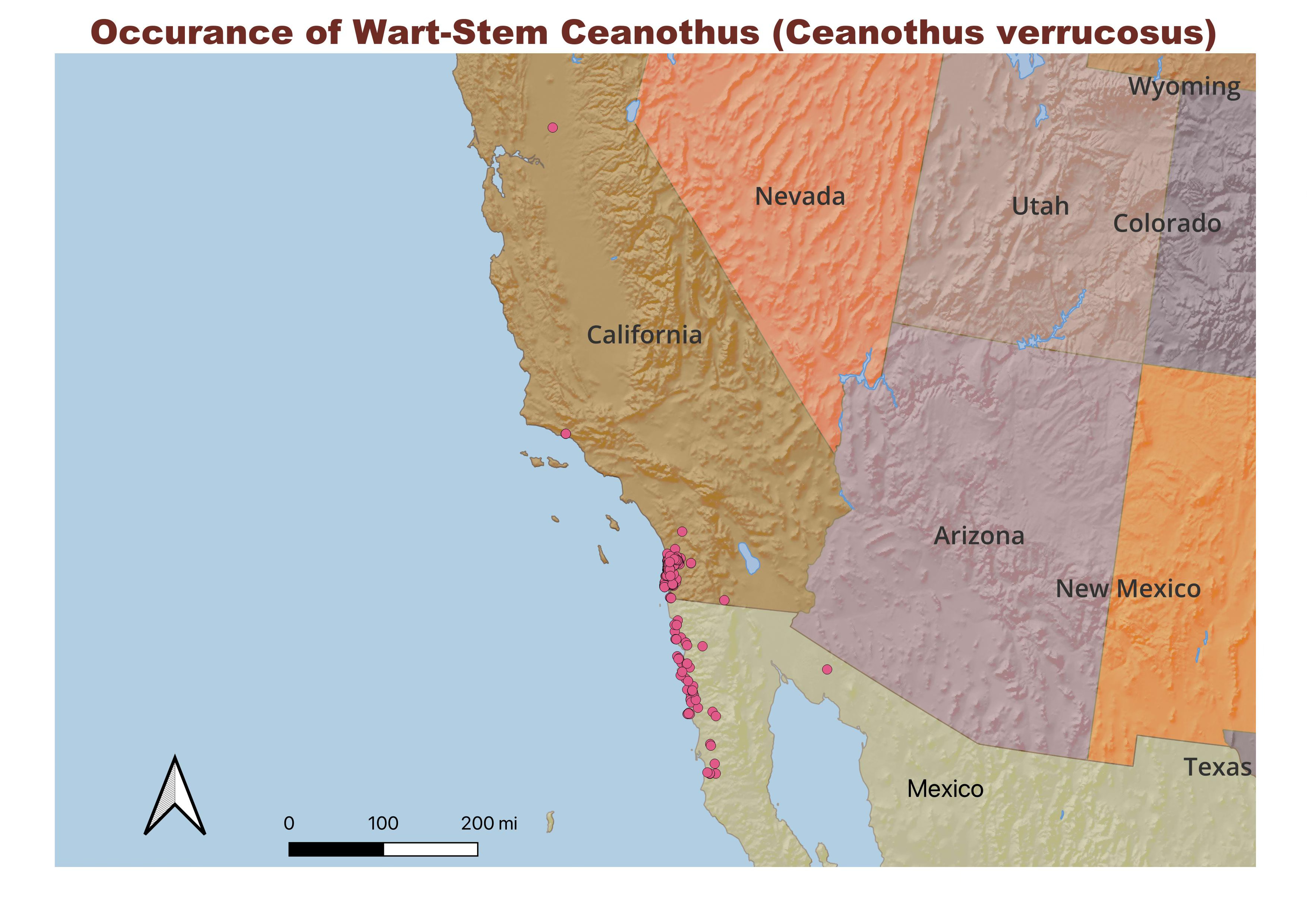
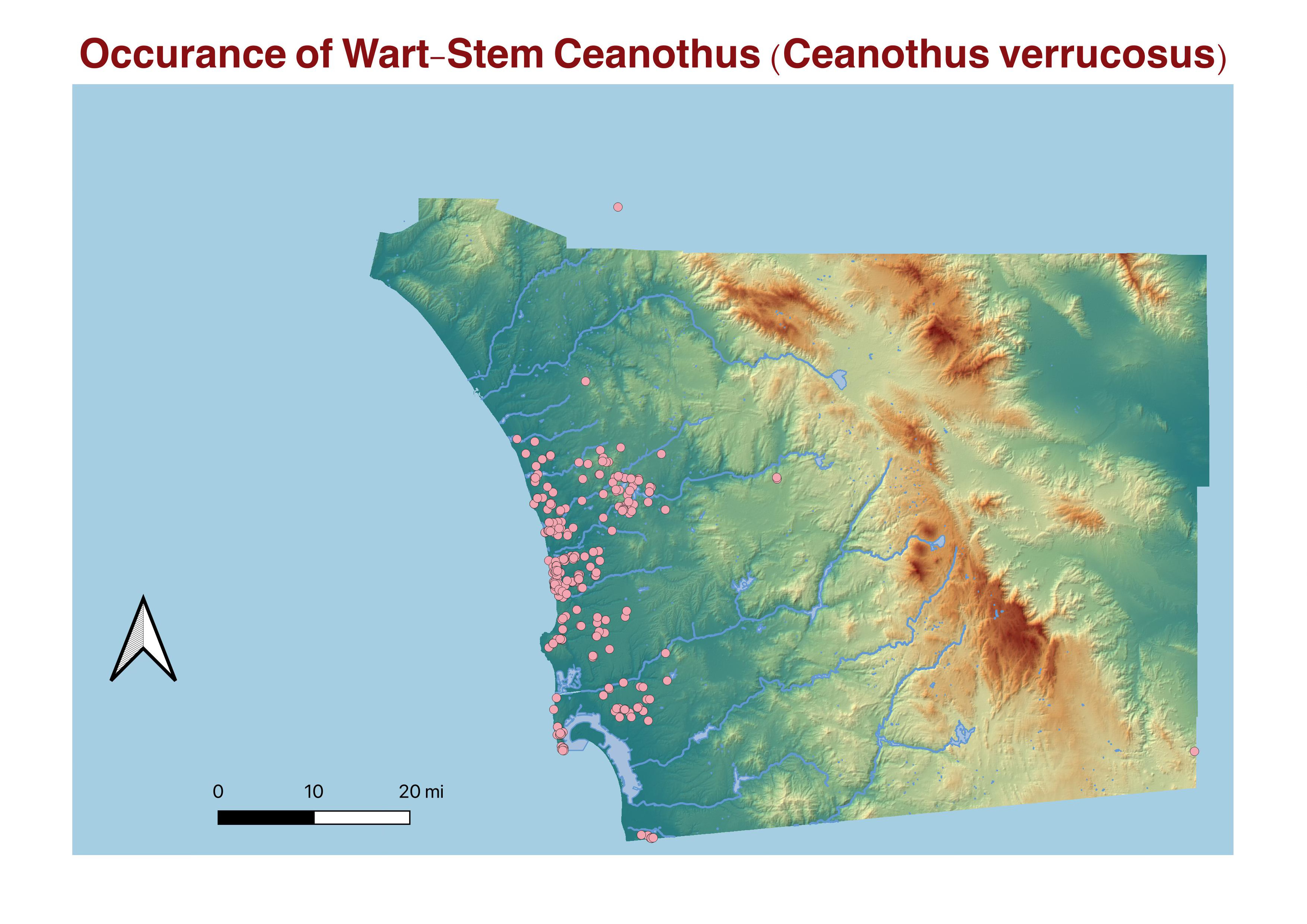
Wart-stemmed ceanothus (Ceanothus verrucosus) is yet another rare and endangered plant I work with. These shrubs are endemic to the coastal sections of northern Baja, Mexico, and Southern California. A few have been spotted elsewhere, some in the northern Central Valley and a handful around Santa Barbara, but these were probably horticulturally planted.
For landscaping with native plants in Southern California, I like to work with these members of the Buckthorn family. They are fairly hearty and easy to grow. I’m told they like sandstone soils, but from my experience they don’t seem too picky about growing in clay or other soils. When I started working 12 years ago at this small zoo/aquarium in southern San Diego County, there were two of these ceanothus plants already in the landscaping. I’ve since planted two more in the zoo’s pollinator garden. The only problem is they can be slow growing. I planted the two newer ceanothus plants seven or eight years ago, and neither has grown to three feet yet.
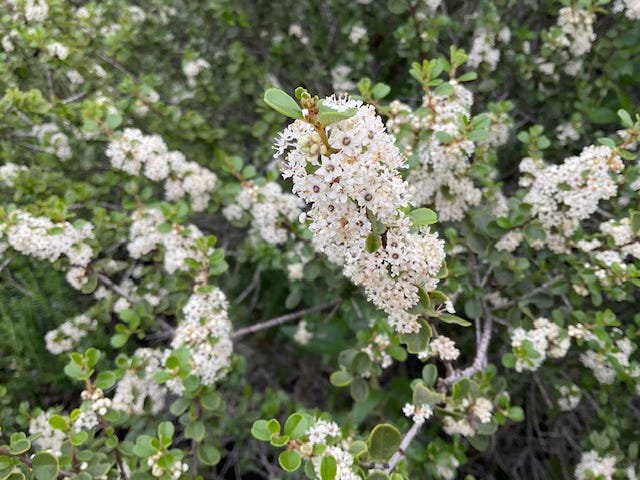
So named because of the small knobs on their stems, the wart-stemmed ceanothus blooms in the spring, with moths, butterflies, and bats visiting their clusters of small, white flowers. Like this morning, I mostly see bees visiting the blooms, usually European honeybees, and lots of them.
The plant’s leaves are small and obovate. A small dimple at the end of each leaf makes for a heart-shaped appearance. The California Native Plant Society ranks the wart-stemmed ceanothus as 2B.2: “Rare, threatened, or endangered in California, but more common elsewhere; moderately threatened in California.”
Although I have seen wart-stem ceanothus growing in coastal sage scrub, I have found it more often among mountain mahogany, scrub oak, and other coastal chaparral plants. They grow as rounding shrubs, usually attaining the height of an average-sized person. Under the right conditions, they can grow ten feet tall.
Wart-stemmed ceanothus are limited to this small portion of the world, which explains their rarity. Also, we humans have paved over or turned their habitats into neighborhoods, city streets, and backyards. This has further limited their habitat and numbers.
There are other types of ceanothus plants, roughly 58 species in the genus. And you might say they are California plants. Although they grow throughout North America and Central America, 42 ceanothus species are endemic to California; 25 species can be found in San Diego County.
Why there are so many rare and endangered species in San Diego County
In about a 40-to 50-foot radius around the two older ceanothus at my workplace, I see four other rare and endangered species: Shaw’s agave, San Diego sunflower, Tecate cypress, and coast barrel cactus.
San Diego County is a hotspot for rare and endangered species, having the most biodiversity of any county in the United States. San Diego’s geography is part of the reason; the county encompasses coasts, foothills, mountains, and desert. Within a short distance, you can travel from estuaries to alpine meadows, pine forests to oak woodlands, to palm-shaded oases.

Additionally, if you take a close look at a map of the area, you’ll see a line of mountains starting in Baja California, Mexico, and heading north just past Los Angeles. This is the Peninsular Range (the mountains I saw on my way to work this morning). It rose up 90 million years ago and cut the western portion of southern California and northern Baja from the rest of the continent.
Since the time of dinosaurs, species have had time to evolve in this ecological island. Most of the rare and endangered species that I have written about in the In Touch series are endemic to southern California.
I’ll be continuing this series on rare and endangered species, and I’m also considering another series on invasive species. Do these topics interest you? Would you rather read about other topics in The Green Dispatch? Click the “Leave a comment” button below and let me know.
Previous In Touch postings on rare and endangered species:
I'd love a series on Invasive Species! I'm still learning so much about California's plant life, and am interested in the natural history, including the colonization of other plants.